 Reading time: 8 minutes
Summary
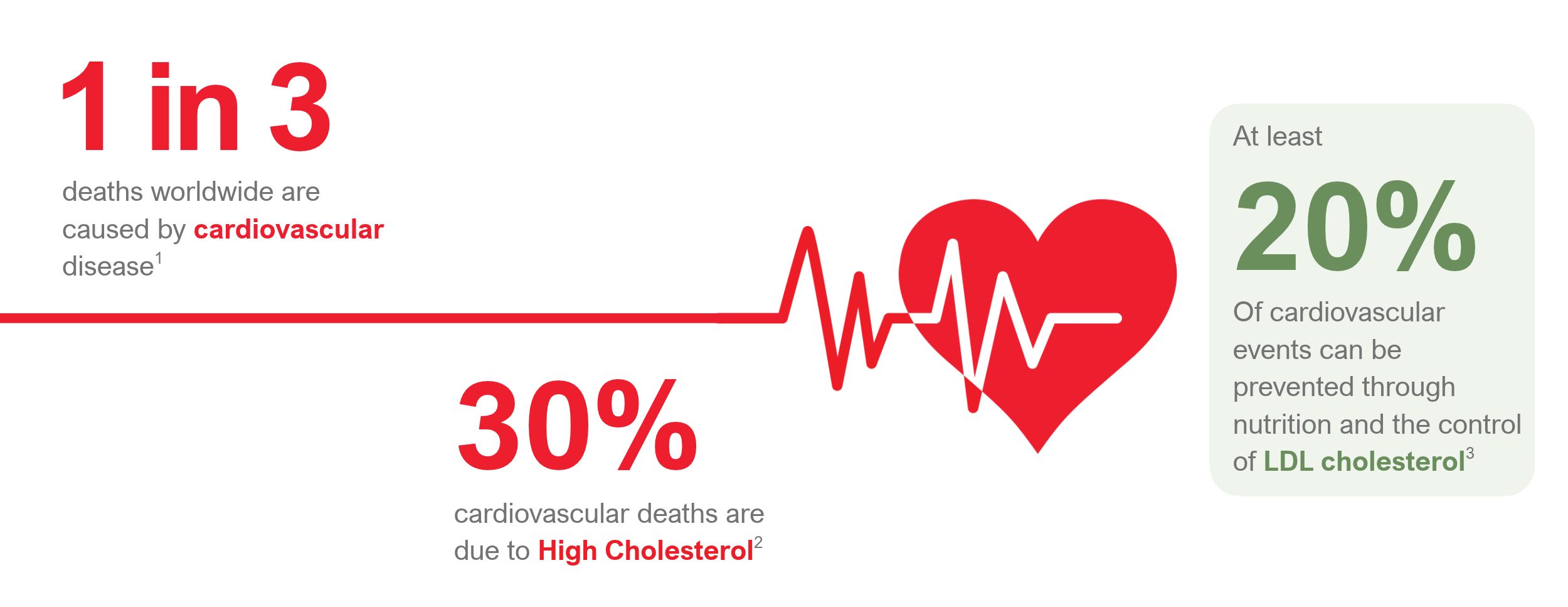
One in three deaths worldwide is due to cardiovascular causes, and in 30 per cent of cases, high cholesterol levels are to blame. Figures from the WHO remind us just how vital it is to be able to control blood cholesterol levels, particularly LDL cholesterol, which causes deposits to build up on the walls of blood vessels.
Early prevention of cholesterol-related cardiovascular health problems can be achieved through dietary supplements.
The forthcoming ban on monacolin from red yeast rice nevertheless deprives this sector of a means of acting on endogenous cholesterol – that is, the cholesterol produced by the body.
This reinforces the need to tackle the other source of cholesterol even more effectively: the cholesterol we obtain from food.
To this end, plant sterols, found in seeds and oils, offer a solution that is safe, natural and effective.
Cholesterol has a bad reputation. It only attracts attention when it is linked to an abnormality in a blood test and becomes a risk factor for heart health.
But cholesterol is, first and foremost, a useful molecule – indeed, an essential one for our metabolism. Let’s start by giving it the credit it deserves.
Cholesterol is synthesised by our cells, mainly in the liver. It is then used as a substrate to produce steroid hormones, bile acids or even cholecalciferol, the precursor to vitamin D.
Its presence in cell membranes helps to stabilise them and regulate their fluidity, a key factor in their function.
It is therefore far more a question of controlling blood cholesterol levels than of seeking to eliminate it from our bodies.
It is the cholesterol present in the blood that can cause cardiovascular problems, with two possible sources: endogenous synthesis by our bodies, and a fraction supplied by our diet.
Apart from the most extreme dietary imbalances, only excessive endogenous synthesis is likely to cause problems. The dietary component merely exacerbates the issue.
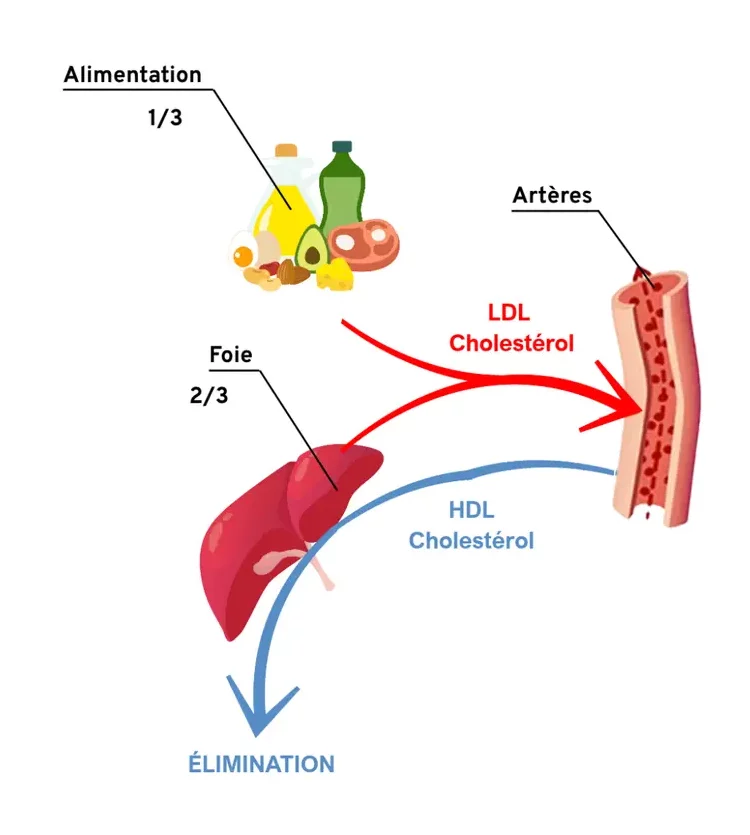
If cholesterol levels are too high, it is therefore possible to take action on both fronts: reducing endogenous synthesis and limiting dietary intake.
The terms ‘good’ and ‘bad’ cholesterol in the blood are artificial distinctions, as it is in fact the same cholesterol found in both cases. The cholesterol considered ‘bad’ is that carried by low-density lipoproteins (LDL), which are rich in lipids and capable of depositing this cholesterol in the walls of blood vessels.
Cholesterol becomes ‘good’ when it is found in high-density lipoproteins (HDL), which transport it back to the liver for elimination.
Cholesterol accumulated in the walls of blood vessels causes the most harm when it oxidises and also triggers an inflammatory reaction.
From very good to very bad, it is all a question of regulation and balance.
Statins are molecules that help to reduce the body’s own production of cholesterol. They work by inhibiting the activity of a key enzyme in this metabolic process, HMG-CoA reductase.
Most of these molecules are pharmaceutical compounds. They are administered as medication under medical supervision.
Whilst their effectiveness is well established, their side effects are, unfortunately, just as well known. Taking statins is often accompanied by muscle pain. It also has less obvious consequences for other metabolites that are also linked to cholesterol metabolism.
This is the case, for example, with coenzyme Q10, which is essential for energy production by the mitochondria and whose levels are reduced when taking statins.
Until now, the dietary supplements sector has had access to a compound from the statin family, with the same mechanism of action and recognised efficacy: monacolin K.
This natural statin is produced by the fungus Monascus purpureus, which grows on rice and gives it a red colour, hence its name ‘red yeast rice’.

Monacolin from red yeast rice was initially authorised in Europe for a daily intake of 10 mg, a dose considered effective and which allowed claims to be made regarding the maintenance of normal cholesterol levels.
For safety reasons, this dose was subsequently reduced to 3 mg per day in 2022. This raised questions about its efficacy at such a low intake, and its health claim could no longer be used. It was withdrawn in 2024.
The side effects of statins remained a focus of concern for the EFSA, which concluded in 2025 that it could not guarantee the safety of its use, even at a dose of 3 mg.
The final blow came from Japan, where batches of red yeast rice contained not only monacolin K but also mycotoxins produced during the fermentation process. These contaminated batches led to liver damage, in some cases resulting in death.
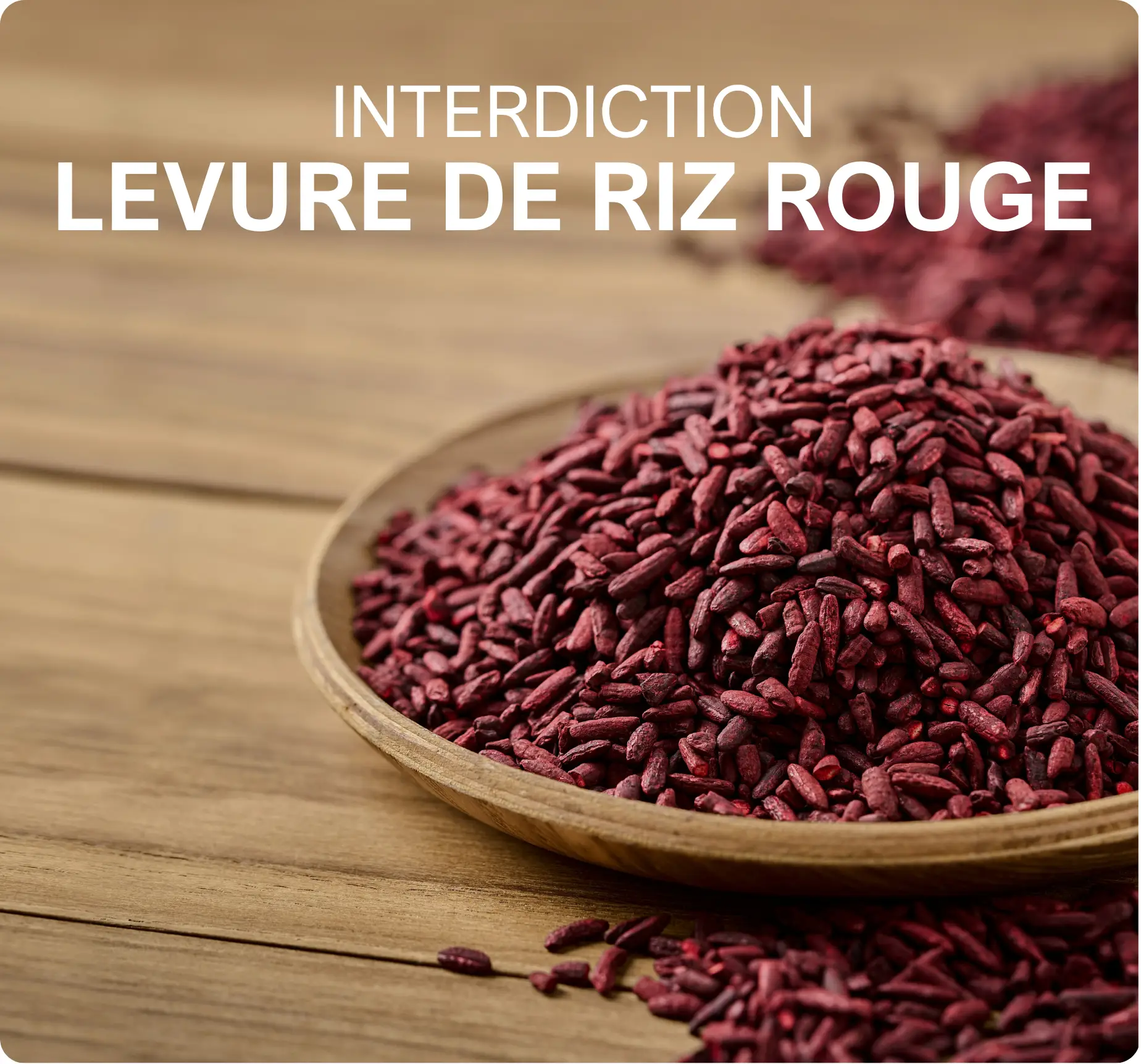
But what next?
The range of treatments available to control blood cholesterol will lose an effective option. It was also the only statin available for use in dietary supplements.
But the need to control blood cholesterol remains.
Another way to lower blood cholesterol – and, more specifically, LDL cholesterol (the ‘bad’ sort) – is to tackle cholesterol from food.
To do this, we can use plant-based ingredients whose safety and effectiveness have been proven: plant sterols or phytosterols.
Instead of cholesterol, plants produce very similar molecules, known as phytosterols, which are found in the so-called unsaponifiable fraction of vegetable oils and in very limited quantities (virgin oils contain between 0.5 and 2 per cent unsaponifiables, whilst refined oils contain even less).
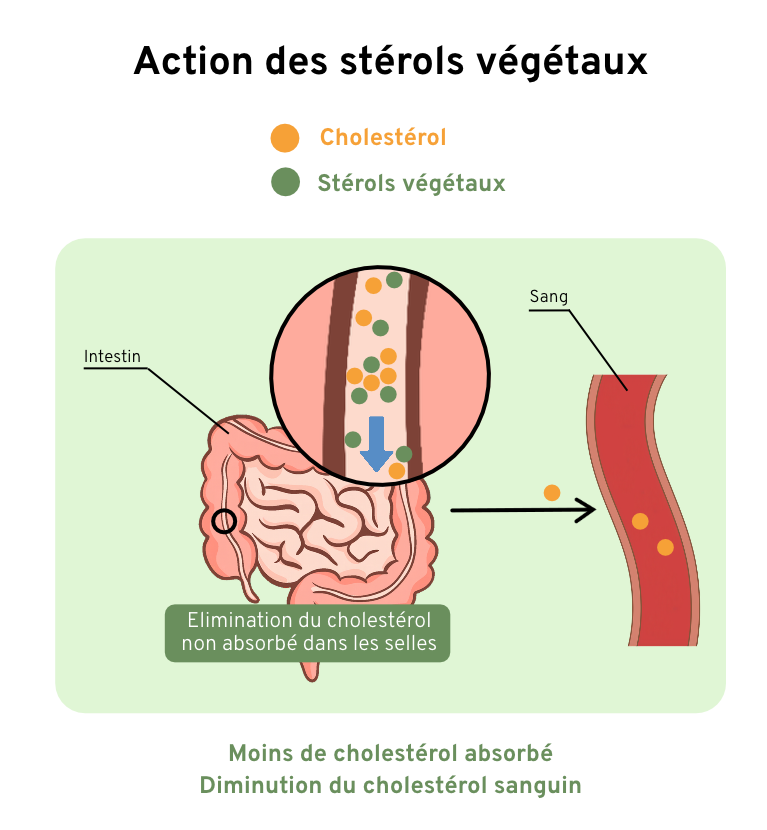
It is the great similarity in the structures of cholesterol on the one hand and phytosterols on the other that explains their use in limiting the absorption of dietary cholesterol.
By taking the place of cholesterol during the intestinal absorption process, phytosterols reduce the impact of this dietary source.
Less cholesterol absorbed during digestion also means less cholesterol in the blood.
Dietary cholesterol accounts for 30 per cent of blood cholesterol, with the remainder coming from the body’s own production.
These proportions naturally depend largely on the individual’s diet. And whilst dietary cholesterol accounts for only a fraction of blood cholesterol, it is nonetheless significant and, where there is a risk to cardiovascular health, it becomes an effective target.
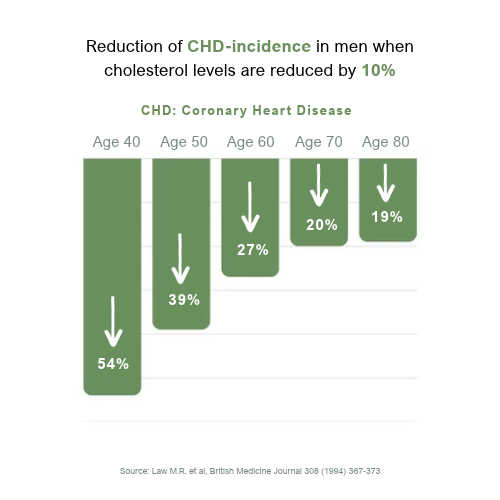
The European Food Safety Authority (EFSA) has validated the cholesterol-lowering effects of phytosterols. A 10 per cent reduction in LDL cholesterol (the ‘bad’ cholesterol that can build up in the walls of blood vessels) can be achieved within 2 to 3 weeks by consuming 1.5 to 3 g of phytosterols per day.
This efficacy is reflected in the existence of several health claims relating to the protection of cardiovascular health (Regulations (EU) No 432/2012 and 983/2009), and is coupled with a well-established safety profile.
A daily intake of at least 0.8 g of phytosterols in the form of food supplements allows the claim that ‘Plant sterols/plant stanols help maintain normal cholesterol levels’.
A higher intake, between 1.5 and 3 g per day, also allows a claim to be made regarding a preventive effect on the risk of coronary heart disease: “It has been demonstrated that plant sterols lower/reduce blood cholesterol levels. High blood cholesterol levels are a risk factor for the development of coronary heart disease.”
Plant sterols represent an effective alternative to red yeast rice monacolin, with proven safety. They significantly reduce dietary cholesterol in the blood and protect cardiovascular health.
Would you like to explore the potential of phytosterols for your next formulation?
Contact the Novastell teams to find out about the solutions available and discuss how they might meet your specifications.
– World Health Organization – 2002
– World Health Organization – 2025
– Carson J.A.S. et al. Circulation 141 n°3 (2020) e39-e53
– Law M.R. et al. British Medical Journal 308 (1994) 367-73
– Shan Z. et al, JAMA internal medicine 180 n°8 (2020) 1090-1100
Produits liés :