
 Reading time: 8 minutes
Summary
Cannabis is the most widely used illicit substance in the world and the one on which public authorities find it most difficult to take a stance. Between total prohibition and legalisation, the spectrum is very broad and changes regularly.
However, behind cannabis and illicit substances lies a little-understood biological system: the Central Endocannabinoid System, or CES.
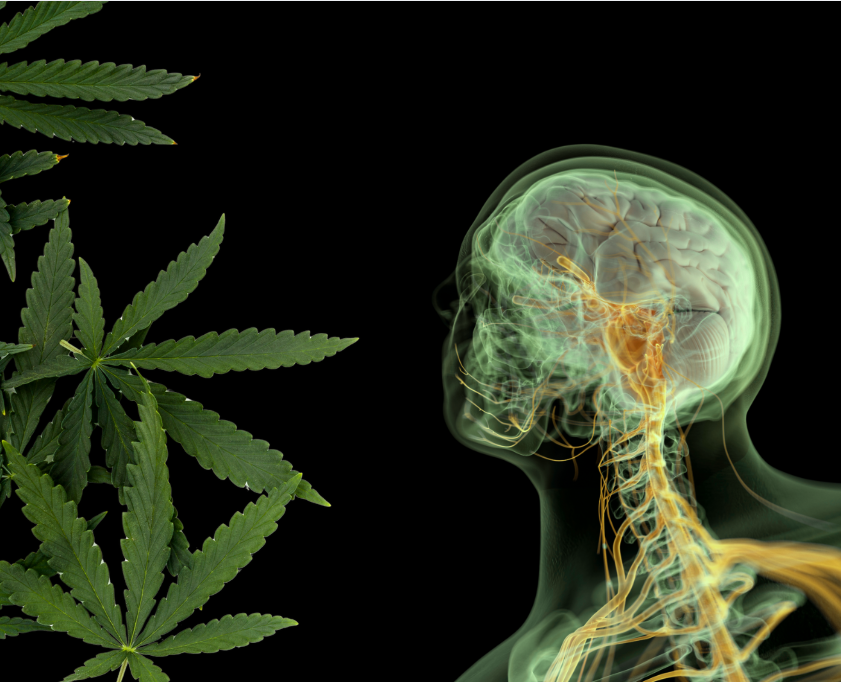
For thousands of years, most civilisations have used cannabis for its effects on the body, whether for medical, recreational or spiritual purposes.
There is evidence of its use in China as early as 2,000 years before our era, as an anaesthetic for surgical operations.
As early as 1,500 BC, the Egyptians were already using it to treat inflammation. Traces of cannabis have been found in ancient Rome and Greece, where it was used to relieve pain, calm disputes and ease suffering.
More broadly, in India, cannabis has been used for millennia in Ayurvedic medicine to relieve pain and anxiety, promote sleep and induce a sense of euphoria.
Today, cannabis is used throughout the world, for both medical and recreational purposes. Its health effects are well known and recognised. It is primarily the legal framework surrounding its use that raises questions.

Scientific research into cannabis began in the 20th century, and cannabidiol (CBD) was first isolated in 1940 by Roger Adams of the University of Illinois.
In the 1960s, Raphael Mechoulam and his team made a giant leap forward in understanding the effects of cannabis.
They described the complete structure of CBD, followed by that of tetrahydrocannabinol (THC), two of cannabis’s main active compounds.
Most importantly, in the late 1990s, they isolated two endocannabinoids: anandamide (AEA) and 2-arachidonoylglycerol (2-AG).
This enabled science to make a quantum leap in understanding the mechanism of action of cannabis and to identify the specific cannabinoid receptors CB-1 and CB-2.
This led to the discovery of the endocannabinoid system, a regulatory network that operates both centrally and peripherally and is involved in numerous physiological functions of the body.

When we talk about the central endocannabinoid system, we tend to think of cannabis and its compounds before considering the body’s regulatory mechanisms. Yet the central endocannabinoid system exists and is constantly at work, even without cannabis.
Similarly, we tend to think of the relaxing, euphoric or even psychotropic effects of cannabis before considering the full range of physiological processes in which it is involved and all the health benefits it can offer.
AEA and 2-AG activate CB-1 receptors found throughout the body, primarily in the brain and the central nervous system. These are involved in modulating the nervous system, particularly in regulating various functions such as anxiety, stress and pain perception.
2-AG also activates CB-2 receptors located in various parts of the immune system. In the joints, for example, the CB-2 receptor is expressed by immune cells in the synovial fluid, such as chondrocytes. CB-2 receptors are associated with anti-inflammatory activity.
FAAH (fatty acid amide hydrolase) breaks down anandamide;
MAGL (monoacylglycerol lipase) breaks down 2-AG
The benefit of the central endocannabinoid system is that it acts and restores balance.

Research into the endocannabinoid system is still ongoing, and new potential applications are regularly being identified. Nevertheless, the importance of the CES in several physiological mechanisms has already been demonstrated:
It is hardly surprising that this has been the primary use of cannabis for centuries. The endocannabinoids AEA and 2-AG, through their action on the CB-1 receptor, have a direct effect on the regulation of stress and anxiety. This promotes faster sleep onset and better quality sleep.
CB-2 receptors, found in the immune system, modulate the inflammatory response by reducing the production of pro-inflammatory cytokines.
Activation of the CB-1 receptor, which is linked to nerve responses, helps to inhibit the nociceptive effect, which enables the neural transmission of pain.
Activation of CB-1 in the hypothalamus is linked to improved regulation of body temperature in response to hyperthermia or hypothermia.
Thus, the central endocannabinoid system is involved in the regulation of numerous biological processes. Its mechanism of action enables a rapid response to various stimuli; however, the rapid enzymatic breakdown of endocannabinoids may limit its effect.
The first answer has been known for a long time. THC, one of the main active compounds in cannabis, is an exogenous cannabinoid. It directly activates the cannabinoid receptors without the need for anything else. The downside is that the receptors are overstimulated, leading to a psychotropic effect and medium-term health risks. This is why THC and the use of cannabis are banned in most countries.
Another approach is to increase the physiological levels of the endocannabinoids AEA and 2-AG by inhibiting the enzymes FAAH and MAGL, which are responsible for breaking them down. In this way, the endocannabinoid system is not forcibly activated; instead, it is triggered naturally in response to a stimulus. This ensures that endocannabinoid concentrations remain within physiological ranges, thereby avoiding overstimulation of the CB-1 and CB-2 receptors.
This is how CBD works; it is recognised for its relaxing effects, but without being a psychoactive substance like THC. CBD inhibits the FAAH enzyme, which breaks down anandamide. As a result, the concentration of AEA (anandamide) increases, leading to greater activation of the CB-1 receptor and a relaxing effect. CBD also acts on other pathways, such as the 5HT1A receptors (modulation of mood and anxiety), PPARγ (management of inflammation) and TRVP1 (pain signalling).
However, CBD is still classified as a ‘novel food’ and is banned for use in food products in most countries. Fortunately, alternatives do exist.
The best-known alternative, due to its role in the endocannabinoid system, is palmytoylethanolamide (PEA).
PEA has a chemical structure very similar to that of anandamide. When cells produce the enzyme FAAH to break down AEA, they have the choice between the endocannabinoid and PEA. This therefore slows down the breakdown of AEA and consequently increases its concentration and the activation of the CB-1 receptor.
This helps to modulate nervous system responses and reduce anxiety and stress.
However, AEA and PEA have little or no effect on CB-2 receptors, which modulate the immune and inflammatory responses. It often takes several days to feel the first effects, whereas people are looking for immediate relief.
More recently, CiBium, a new active ingredient developed by Sesqium and distributed in France by Novastell, has appeared on the market. CiBium increases 2-AG levels by inhibiting the MAGL enzyme. 2-AG is the body’s main endocannabinoid, acting effectively on both the CB-1 and CB-2 cannabinoid receptors. This more complete and prolonged activation of the two receptors helps to modulate both nervous and immune responses. Above all, consumer studies and user feedback indicate that the effects are felt immediately, within 20 minutes to 1 hour.
CiBium therefore enables you to take full advantage of the properties of the central endocannabinoid system, and there are a vast number of applications where a nervous and immune response is required.
In the management of premenstrual syndrome, activation of CB-2 helps to limit inflammation in the uterus and breasts. Activation of CB-1 reduces nociceptive transmission, thereby reducing pain and improving overall mood.


The Central Endocannabinoid System (CES) is a micro-regulatory system that is fundamental to the body’s homeostasis, via the activation of the CB-1 and CB-2 receptors
It was only recently discovered following advances in research into the effects of cannabis, and its implications for physiological mechanisms are numerous, ranging from the reduction of inflammation and pain to the alleviation of anxiety and improved sleep.
CiBium helps to improve the effectiveness of the central endocannabinoid system by increasing the concentration of 2-AG, the main endocannabinoid that enables the full activation of CB-1 and CB-2 receptors, thereby ensuring a better response to the body’s needs.
Produits liés :