 Temps de lecture : 10 minutes
Résumé
On 15 April 2026, the French Directorate-General for Food (DGAL) confirmed that CBD is classified as a Novel Food and is therefore no longer authorized for use in food supplements. As a result, products containing CBD intended for oral consumption must be withdrawn from the market.
Yet CBD remains highly valued by consumers for its perceived benefits in well-being, relaxation and everyday comfort. Its withdrawal from the food supplement market therefore leaves many consumers looking for alternative solutions.
Fortunately, natural, safe and legal alternatives are available. These solutions can help support well-being and provide relief, offering consumers effective options that comply with current regulations.
Over the past decade, alongside the legalization of medical cannabis – and, in some countries, recreational cannabis – a new market has rapidly emerged: CBD. Specialized stores, oils, dietary supplements, beverages, and wellness products have become increasingly common.
CBD, or cannabidiol, is substance extracted from hemp and other plants of the Cannabis family, such as marijuana.
Available in a wide range of products, including oils, dietary supplements, and food preparations, CBD has gained popularity for its perceived benefits in promoting relaxation, reducing stress and anxiety, and supporting sleep quality.
A study conducted by Santé Publique France (French national health agency) in 2022 found that around 10% of the French population had used CBD at least once during the previous year. Since then, consumer interest has continued to grow, driving the development of a thriving industry dedicated to CBD-based products.
While THC remains classified as a narcotic and is subject to strict regulation in many countries, CBD has generally been viewed as a non-psychoactive alternative, contributing significantly to its widespread adoption among consumers seeking natural wellness solutions.
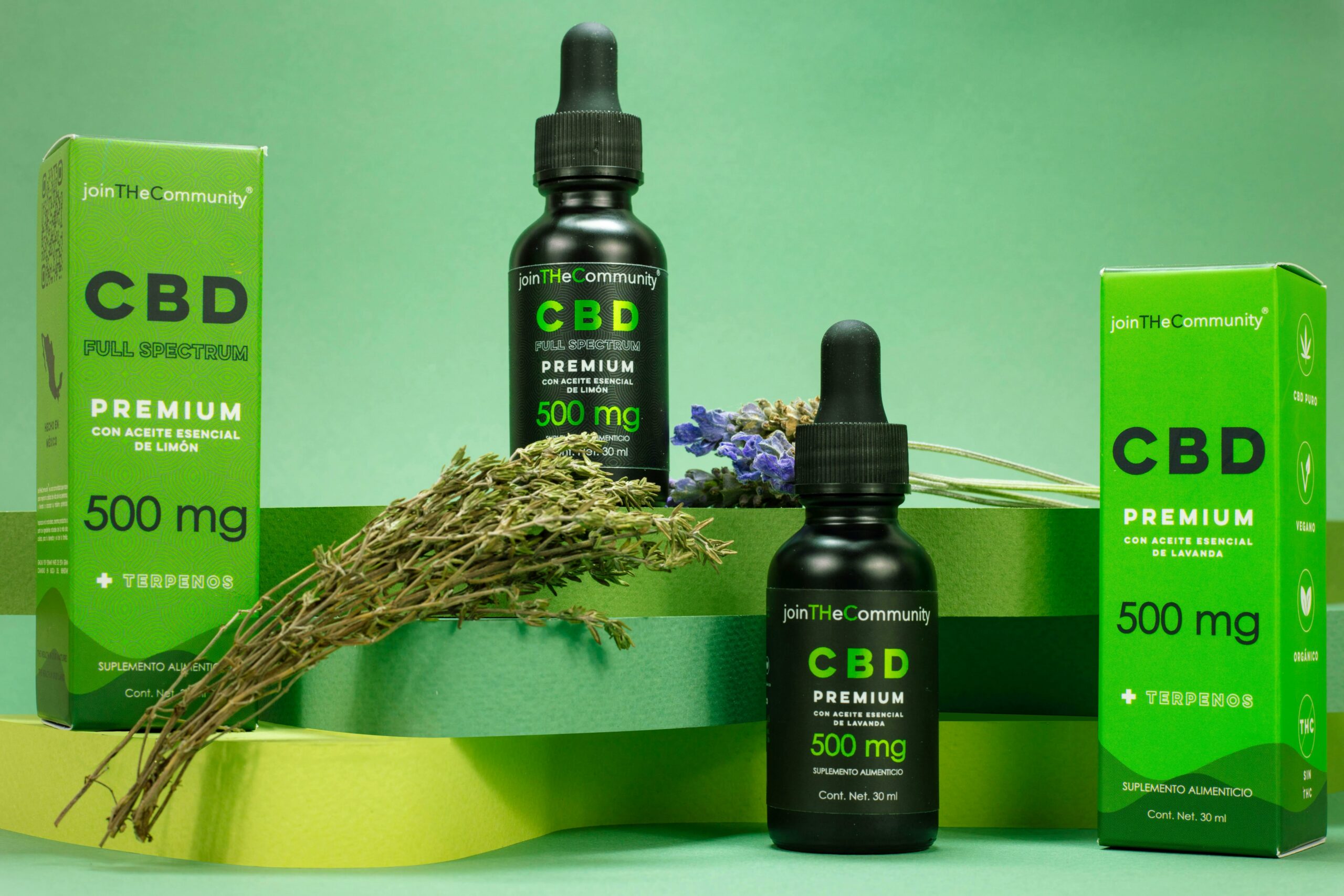
CBD was first identified in the 1940s during research on cannabis.
For many years, CBD was often confused with cannabinoids as a whole. In reality, CBD is just one member of a larger family of compounds capable of interacting with the body’s endocannabinoid system.
Unlike THC, CBD does not act as a classic direct agonist of the CB-1 receptor. Instead, it exerts an indirect, multi-targeted modulation of the endocannabinoid system, notably by inhibiting FAAH, thereby increasing the levels of anandamide (AEA). Through this mechanism, CBD influences CB1 receptor activity and promotes a rapid feeling of relaxation and stress relief.
The Central Endocannabinoid System is a micro-regulatory network present throughout the body at the cellular level. It enables rapid and short-lived responses to the internal and external stimuli to which we are constantly exposed.
In response to stimulus, cells produce two main endocannabinoids: 2-AG (2-arachidonoylglycerol) and AEA (anandamide).
The cells rapidly produce the enzymes MAGL and FAAH, which degrade the endocannabinoids 2-AG and AEA, thereby terminating the activation of CB-1 and CB-2 receptors.
The central and peripheral endocannabinoid systems then return to their basal state of homeostasis, ready to respond to the next physiological challenge.

CBD is classified as Novel Food in Europe and has never received formal authorization. In France, however, its use in food supplements had been tolerated for several years, and products containing CBD could even be officially declared and registered.
In February 2026, the European Food Safety Authority (EFSA) established a maximum daily intake of 0.0275 mg of CBD per kilogram of body weight, equivalent to approximately 2 mg per day for a 70 kg adult. This level is considerably lower than the amounts typically found in most CBD food supplements available on the French market.
The EFSA also highlighted significant gaps in the available safety data, particularly regarding the potential effects of CBD on liver function, the nervous system, and reproductive health.
As a result, and in response to the increasing number of food safety incidents associated with CBD consumption, the DGAL announced the implementation of a new enforcement plan aimed at banning and withdrawing CBD-containing food products from the market.
The withdrawal of CBD from the food supplement market should not overshadow the importance of the endocannabinoid system and its role in maintaining physiological balance. Over the past four decades, a growing body of research has highlighted the many functions regulated by this system.
For consumers seeking to support the full potential of their endocannabinoid system, the end of CBD supplementation does not mean the end of effective solutions.
CiBium is a natural and innovative ingredient, fully authorized for use in food supplements. By supporting 2-AG tone, CiBium promotes a more comprehensive activation of the endocannabinoid pathway through both CB-1 and CB-2 receptors.
By inhibiting the MAGL enzyme, CiBium helps increase the concentration of 2-AG, the body’s primary endocannabinoid. This naturally enhances the activation of CB-1 and CB-2 cannabinoid receptors while remaining within physiological ranges.
The result is a targeted and balanced support of the endocannabinoid system, promoting rapid and effective modulation of nervous and inflammatory responses.
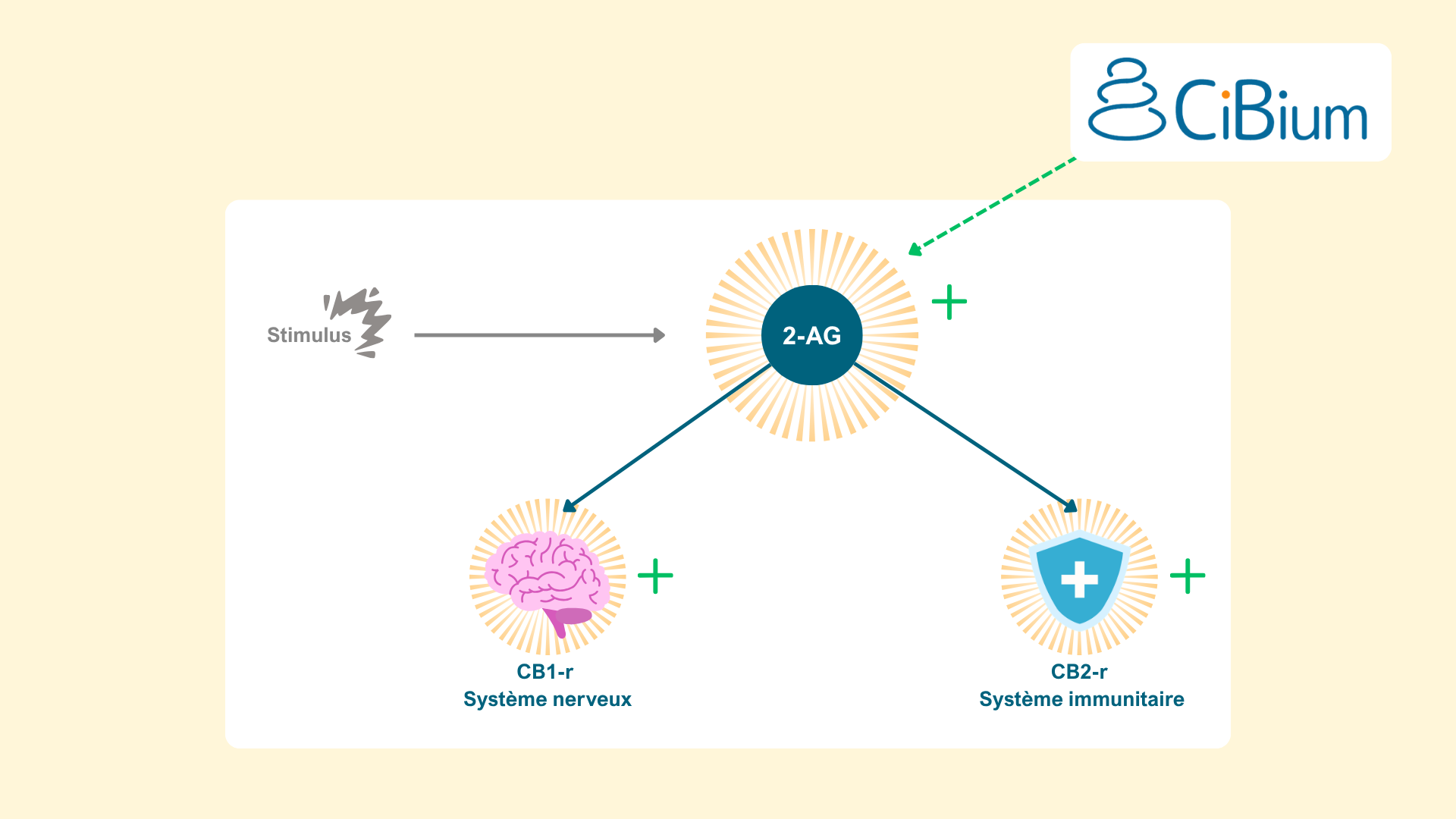
While CBD is primarily associated with modulation of CB1 receptor activity and nervous system responses such as stress and anxiety management, CiBium acts on both CB1 and CB2 receptors.
As a result, it not only supports nervous system balance, but also influences immune and inflammatory responses. This broader activity profile opens the door to a wider range of potential applications.
Examples include:
CiBium is highly effective in supporting the management of anxiety, stress, and mood. Within minutes, users report a sense of relief, a reduction in rumination, and an improved ability to let go of mental tension.
A very recent consumer study also showed that 75% of consumers experienced a reduction in anxiety, 85% reported lower stress levels, and 75% noted an improvement in sleep quality.
Premenstrual syndrome
Premenstrual syndrome is characterized by uterine inflammation and breast tenderness. The CB1 endocannabinoid receptor helps modulate pain and reduce inflammation in the uterus and breast tissue. CB1 activation is also associated with reduced anxiety and stress levels, as well as improved sleep quality.

Joint comfort
Joint pain is characterized by severe inflammation and throbbing discomfort. By acting on the CB1 receptor, CiBium helps support the reduction of inflammatory responses, while CB2 receptor activation contributes to the modulation of pain perception, resulting in improved comfort.
Research on CBD has contributed to a better understanding of a key physiological network in the human body: the central and peripheral endocannabinoid systems.
This system enables fine regulation of physiological balance through CB1 and CB2 receptors, which are involved in modulating nervous and immune responses.
CiBium promotes a more comprehensive activation of the endocannabinoid system, helping to optimize its natural regulatory functions, including the modulation of inflammation, pain, and stress, while remaining within physiological limits.
The range of potential applications is broad, offering a natural, healthy, and authorized alternative for consumers seeking options beyond CBD.